Used car prices have started cooling off, and winter only adds pressure on trade-in values. Dealers know that cold weather, road salt, and sluggish buyer demand can make it harder to move inventory. That reality shows up directly in the number they write on your appraisal slip.
Paint protection film (PPF) cannot change market cycles, but it can keep your car’s condition from sliding downhill at the worst possible time. For many owners, that difference is exactly what separates an average trade-in offer from a strong one.
Winter is the slow season for selling cars
Industry data shows that dealers see the weakest sales in January and February, with demand picking up again in spring when weather improves and tax refunds arrive.
More recent used-car data for 2025 shows prices drifting down through the fall, with analysts expecting the usual pattern of lower values through the winter months.
Lower demand means dealers take fewer risks. If they are unsure how fast a vehicle will sell in February, they leave themselves extra room in the trade-in offer. Any hint that the car might need cosmetic or rust repair gives them another reason to shave the number.
In other words, the seasonal dip in demand does not just affect retail shoppers. It quietly pulls down what your trade-in is worth, especially if your vehicle looks tired after a few winters on salted roads.
Winter wear makes your car look older than it is
Snow, road salt, sand, and small gravel are rough on paint. Salt can corrode metal parts, dull paint, and leave visible rust, which then drags down resale value.
Even when rust has not yet formed, etched clear coat, stains, and endless swirl marks make a relatively new car look years older.
Dealers understand this better than anyone. They worry about both the damage they can see and the damage that might be hiding in wheel arches, rockers, and lower doors after several winters.
If your vehicle arrives on the lot with stone chips across the front bumper, white salt residue in seams, and a hazy hood, the appraiser will assume more work lies ahead.
That perception matters. Even if your maintenance records are perfect, a weather-beaten exterior makes the car feel neglected, and winter driving accelerates that decline.
What paint protection film actually does in winter
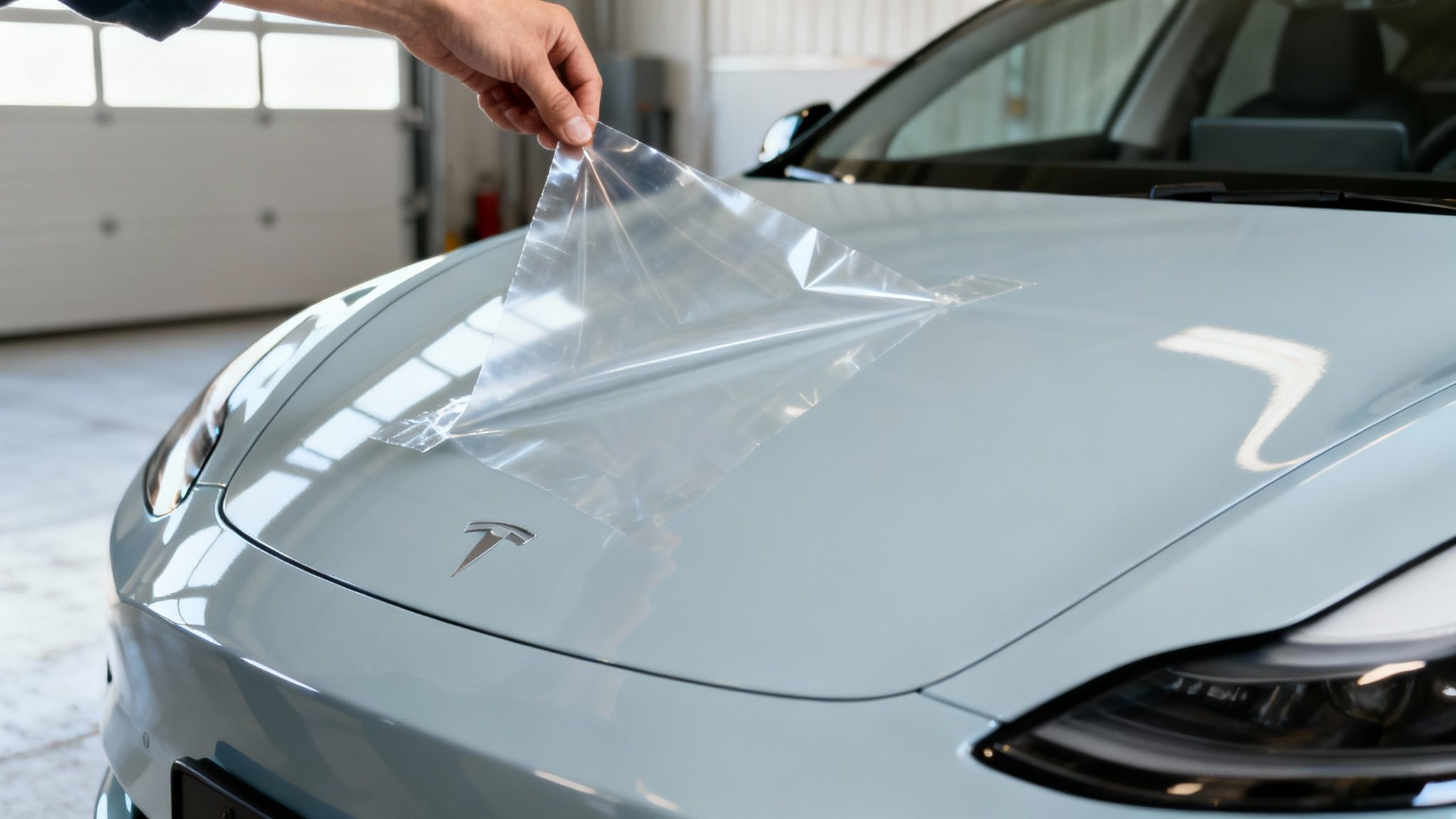
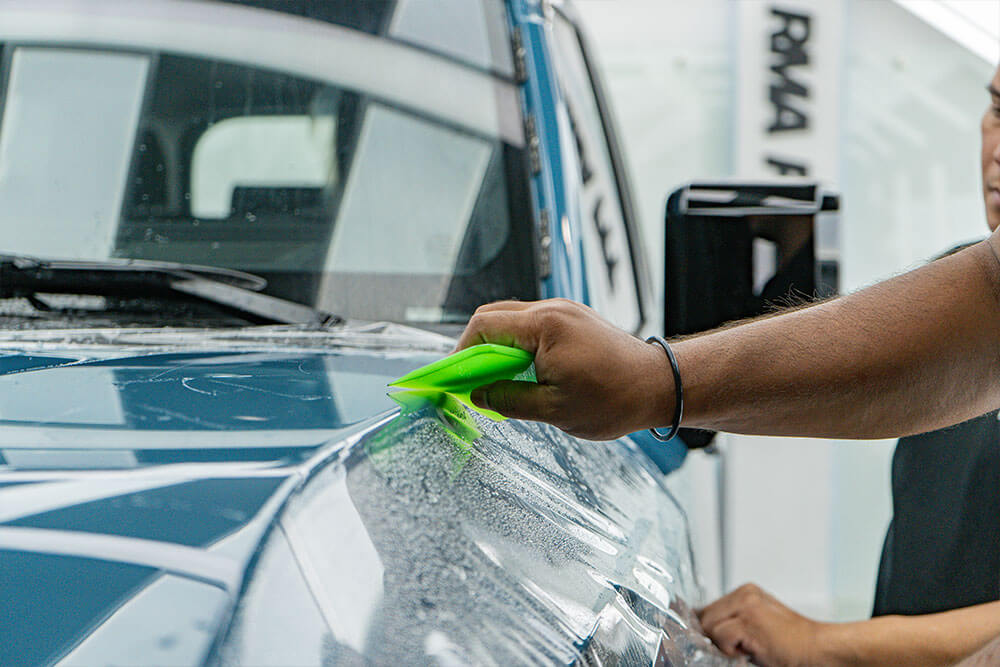
- Paint protection film is a clear urethane layer applied over factory paint, typically on high-impact areas such as the front bumper, hood, fenders, mirrors, and rocker panels. Quality films are engineered to absorb impacts from rock chips and road debris while resisting staining from salt and chemicals.
- Modern films often have self-healing properties: light scratches and swirls can disappear with heat from the sun or warm water.
- Studies and installer experience suggest that vehicles with PPF experience far fewer paint-related issues over the first five years compared with unprotected cars.
- In winter driving, that protective layer does the dirty work. Salt, sand, and slush hit the film first instead of your clear coat. Contaminants are easier to wash away, and the underlying paint stays closer to showroom condition.

How PPF helps protect trade-in and resale value
Dealers in Charlotte price trades based on condition grades. A car that looks “excellent” or “very good” on the exterior can command a noticeably higher number than one graded “fair,” even if both have similar mileage.
PPF contributes to higher grades in several ways:
- Fewer stone chips and scratches: Front-end panels stay cleaner, so dealers do not need to budget for repainting.
- Less risk of early rust: When paint is intact, moisture and salt have fewer paths to bare metal.
- Stronger first impression: An appraiser who walks up to a car with glossy, original paint is more comfortable offering a better figure because retail customers respond the same way.
For private sales, the effect is just as real. Buyers often shop by photos first; a car that still looks sharp after multiple winters draws more attention and justifies a firmer asking price.
Viewed over a three- to five-year ownership window, the cost of PPF often compares favorably with the combined hit of paint repair bills and lower trade-in offers.
Timing your PPF install before winter
From a value standpoint, the ideal time to apply PPF is early in the vehicle’s life, before the first serious winter or right after you correct any existing defects. Once rock chips have gone through the clear coat into the primer or metal, a film can no longer hide that damage.
Owners in markets with busy highways and regular road work benefit the most, since debris hits are constant. Around Charlotte and the Carolinas, many drivers choose full or partial front-end coverage so that daily commuting does not sandblast the paint over several seasons.
Local specialists like Atlantic Custom Wraps can guide you on coverage options and film brands if you are searching for services offering paint protection film in Charlotte.
Smarter winter habits that work with PPF
PPF is not magic. It works best as part of a bigger winter-care routine. A few simple habits go a long way toward preserving value:
- Rinse the car regularly at a touchless wash to remove salt and chemical de-icers.
- Avoid scraping heavy ice directly across painted panels; focus tools on glass.
- Clean wheel arches and lower doors periodically, where grime accumulates.
- Keep the interior presentable, since stains and odors also drag down trade-in value.
These steps protect both the film and the areas of the vehicle that are not wrapped, such as the roof or rear bumper on partial packages.
Also Read: Ceramic Over PPF: Do You Really Need Both? A Layer-by-Layer Decision Tree
The bottom line:
Installing car paint protection film before the worst of the weather helps keep factory paint intact, reduces visible damage, and supports a higher condition grade when you eventually trade or sell.
Protect your car’s value this winter with professionally installed PPF from Atlantic Custom Wraps, Charlotte’s dedicated specialist for long-lasting paint protection and custom vehicle wraps. Schedule a consultation through our website: https://www.atlanticcustomwraps.com/